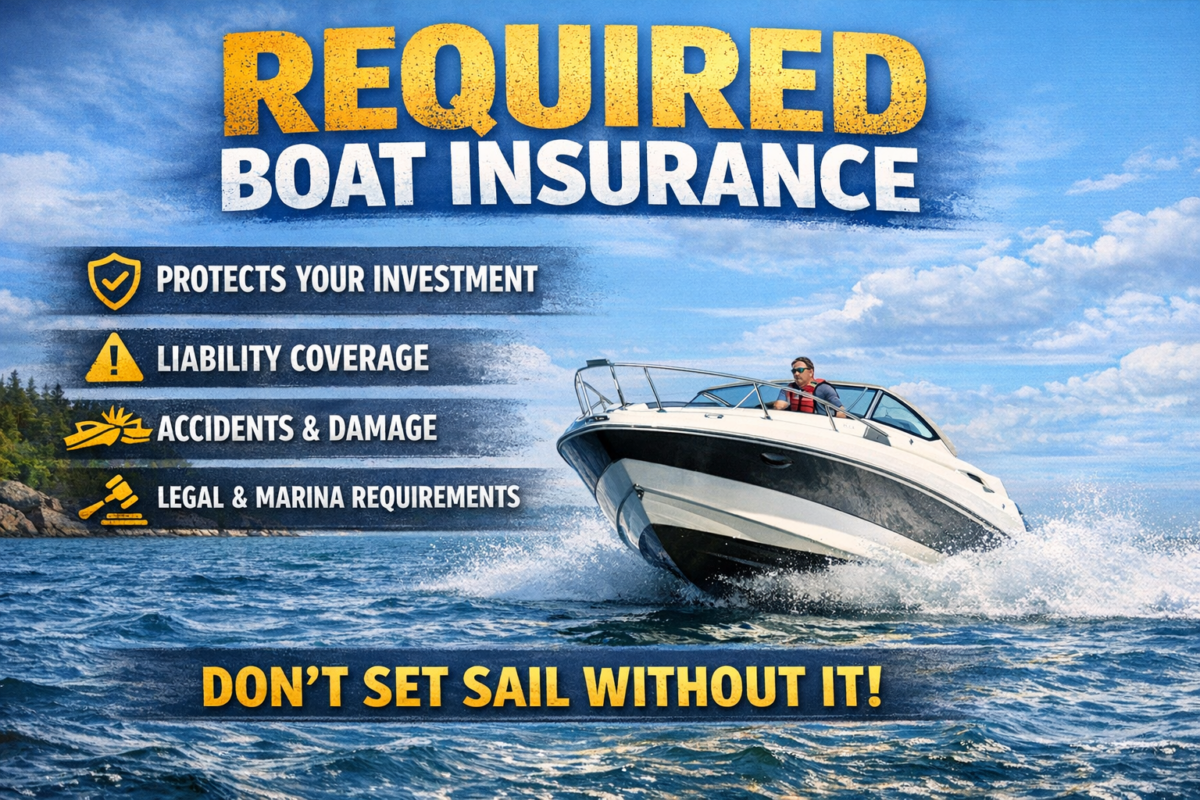
Florida’s sparkling waters attract thousands of boaters each year. Whether you sail along the coast or cruise through inland lakes, understanding the required Florida Boat insurance and state laws can help you protect your investment and enjoy your time on the water. By learning about the essentials of boat insurance and the legal requirements, you can navigate Florida’s waterways with confidence and peace of mind.
Why Florida’s Required Boat Insurance Matters for Florida Boaters
Owning a boat in Florida comes with both excitement and responsibility. Because many of the state’s waterways are shared by locals and tourists alike, accidents can happen. For that reason, boat insurance provides critical financial protection against damage, theft, or liability. Without insurance, a single accident can lead to expensive repairs or medical bills, putting your finances at risk.
Even though Florida does not require boaters to carry insurance by law, lenders usually demand coverage if you finance your boat. Furthermore, https://floridainsurancequotes.net/boat-insurance/florida-marine-insurance/ states that many marinas require proof of insurance before allowing you to dock. Given the state’s unpredictable weather, including hurricanes and sudden storms, having insurance is not just wise, but it’s often necessary.
Besides financial reasons, boat insurance gives you peace of mind every time you head out on the water. Instead of worrying about what could happen, you can focus on enjoying your outing. While accidents are often unpredictable, having insurance means you are ready for the unexpected. As a result, you can relax and make the most of your boating adventures in Florida.
Key Types of Boat Insurance Coverage Explained
Boat insurance policies come with several types of coverage, each designed to protect you in different ways. The most common is liability coverage, which pays for injuries or property damage you may cause to others. Because boating accidents can result in significant financial claims, liability protection serves as a crucial safety net.
Physical damage coverage is another essential part of most policies. For example, if your boat is damaged in a collision, by fire, or even by theft, physical damage insurance will help cover the repair or replacement costs. Many policies also cover personal belongings and equipment on your boat so that you can replace lost items after a mishap.
Some boaters choose to add extras, such as uninsured boater coverage or towing and assistance. For instance, if another boater without insurance causes an accident with your vessel, uninsured boater coverage can cover your losses. Towing and assistance coverage can help pay for emergency help if you break down far from shore. By combining different types of coverage, boaters can tailor a policy to meet their unique needs.
Important Florida Boating Laws and Regulations
Florida has specific laws to keep boaters and waterways safe. While the state does not require boat insurance for privately owned vessels, rules about registration, safety equipment, and boater education are strictly enforced. Every motorized boat operating in Florida waters must be properly registered with the state, and you must display your registration numbers clearly on your vessel.
In addition, Florida law requires specific safety equipment on every boat. For example, all boats must carry a life jacket for each person on board, and most watercraft must have fire extinguishers, sound-producing devices, and visual distress signals. Law enforcement agencies patrol the waters regularly to ensure compliance with these rules.
Boater education is another primary focus in Florida. Anyone born on or after January 1, 1988, must complete an approved boating safety course and carry a boater safety identification card while operating a boat with ten horsepower or more. By following these legal requirements, you help ensure safer waters for everyone.
How to Stay Compliant on Florida Waters With Required Florida Boat Insurance
Staying compliant with Florida’s boating laws protects you and everyone around you. Always keep your boat registration and boater safety card on board whenever you are on the water. Law enforcement officers may request to view these documents at any time, so it is essential to keep them readily accessible.
Before each outing, check that all required safety equipment is present and in good condition. Inspect life jackets, fire extinguishers, and signaling devices before you leave the dock. Since boating laws can change, review the latest regulations from the Florida Fish and Wildlife Conservation Commission regularly.
If you plan to anchor or dock at marinas, be prepared to show proof of insurance if asked. Even though the law may not require insurance, many facilities set their own rules. By taking these steps, you show respect for Florida’s laws and help make the water safer for everyone.
Safety Tips and Best Practices for Responsible Boating
Responsible boating goes beyond following the law. Always check the weather before you leave the dock, because conditions in Florida can change quickly. Intense storms and high winds can appear without much warning, so prepare accordingly and have a plan to return to shore if necessary.
Whenever possible, avoid boating alone. Having another person on board can make emergencies more straightforward to manage. Make sure everyone wears a life jacket, especially children and weak swimmers. Life jackets save lives and are one of the simplest ways to stay safe.
Stay alert and maintain a safe speed at all times. Florida’s waterways can get crowded, and reckless behavior increases the risk of accidents. Never operate a boat under the influence of alcohol or drugs, as impaired boating is both dangerous and illegal. By following these best practices, you help create a safer environment for all boaters.
In Summary
Understanding Florida’s boat insurance options and boating laws is essential for being a responsible boat owner. Because state regulations keep everyone safe, following them gives you peace of mind and helps protect your investment. Even though insurance is not mandatory for every boater, it provides valuable financial security and ensures you are prepared for unexpected events.